
What Is a Powered Site? A Plain-English Guide for Aussie Caravanners
A powered site is a caravan or camping spot with mains electricity at the site. Here is what you get, how 15-amp power works, what lead to pack, and how to book one.
If you are new to caravanning or camping, the booking pages can read like another language. Powered site, unpowered site, ensuite site, slab, drive-through. The single most common question first-timers ask is the simplest one: what is a powered site, and do I need one?
Here is the plain-English answer, plus everything you need to plug in safely and pick the right site for your trip.
The short version
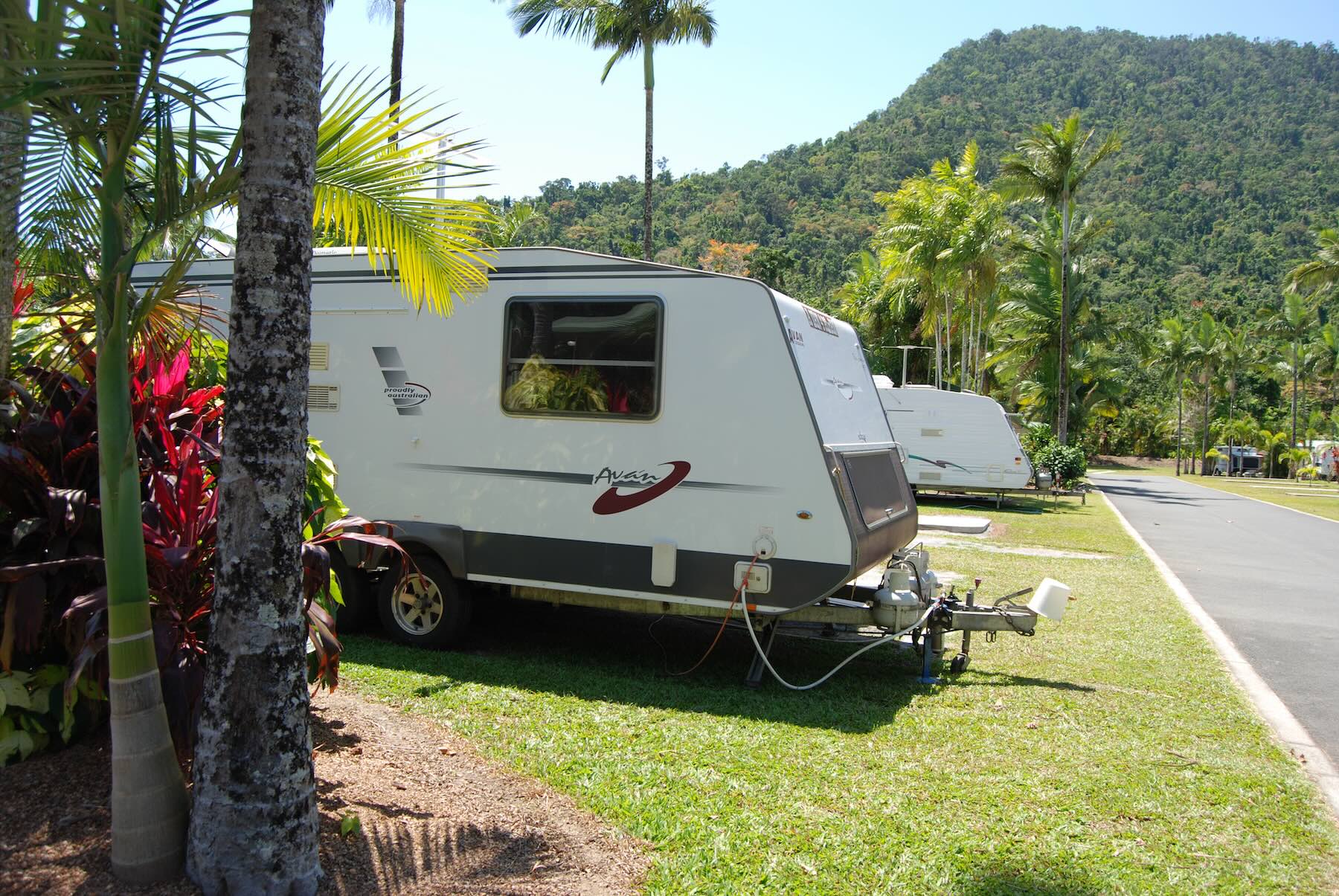
A powered site is a caravan or camping spot with its own mains electricity outlet, right where you park. There is usually a service pillar (a small post or box) beside the slab or grass with a power point on it. You connect your van or camper to that outlet with an approved lead, and you can run your lights, fridge, heating, air conditioning, and appliances just like you would at home.
An unpowered site has no mains electricity. You rely on your own setup, batteries, solar panels, a portable power station, or gas. Unpowered sites are usually cheaper and are popular with tent campers and self-sufficient travellers.
That is the whole concept. The rest of this guide is about doing it well.
Powered, unpowered, or ensuite?
Powered sites are one of a few types you will see on a booking page. Here is how they compare:
| Site type | What you get | Best for |
|---|---|---|
| Powered site | Mains electricity at the site, plus space for your van, camper, or tent | Caravans, motorhomes, families, anyone wanting aircon and a fridge |
| Unpowered site | Just the site, no electricity | Tents, self-sufficient rigs with solar and batteries, lower budgets |
| Ensuite site | A powered site with its own private bathroom attached | Travellers who would rather not share amenities |
| Slab site | A powered site on a concrete pad, easier to level and cleaner in the wet | Caravans, longer stays |
Many parks also describe sites as drive-through, meaning you can pull in one end and out the other without reversing the van. That is about access, not power, but powered drive-through sites are a favourite with larger rigs.
How much power? Understanding 15-amp supply
Powered sites in Australian caravan parks supply 15 amps. That is more grunt than the 10-amp power points in your house, which matters more than you might think.
The easiest way to spot the difference is the plug. A 15-amp lead has a larger earth pin (the bottom pin) than an ordinary household lead. Australian caravans and motorhomes are wired to the AS/NZS 3001.2 standard for connectable electrical installations, and that larger pin is part of keeping the whole setup safe.
A few safety basics worth knowing, drawn straight from state regulators such as Consumer, Building and Occupational Services in Tasmania:
- Your supply lead should be one continuous length, rated at 15 amps, and ideally no longer than 10 metres.
- Fully uncoil the lead before use. A coiled lead under load can overheat.
- Secure the lead to the tie bar on the service pillar so it does not get yanked out or cross a driveway.
- Never use double adaptors or power boards to plug into the park outlet, and only run one lead per outlet.
- Check that the outlet is protected by an RCD (safety switch). If you are powering a tent or a setup that is not hardwired, carry a portable RCD for peace of mind.
If your van is not already fitted with a 15-amp inlet, never modify a plug to force it to fit. The right tool is a proper 15-to-10 amp adaptor with its own circuit breaker, and any actual wiring work should be left to a licensed electrician. Queensland's caravan industry body has a clear rundown of 240V power and safety if you want to go deeper.
What can you actually run?
Fifteen amps is plenty for normal caravan life. The thing to manage is not what you own, but what you switch on at the same time.
You can happily run lights, a fridge, a microwave, a kettle, your chargers, and a single air conditioner or heater. Where people come unstuck is firing up the kettle, the heater, and the aircon all at once on a cold morning, which can trip the supply. The trick is simple: stagger the big-draw appliances. Boil the kettle, then run the toaster, rather than everything together.
Powered or unpowered: which should you book?
It comes down to how you travel.
Book a powered site if you want creature comforts, air conditioning in a Top End summer, a heater in the Tassie highlands, a full-size fridge, and the freedom to charge everything overnight. This suits most caravans, motorhomes, camper trailers, and longer family stays.
Consider an unpowered site if you are in a tent, you have a solar-and-battery setup that keeps you self-sufficient, or you simply want to keep costs down. Grey nomads chasing a long lap often mix the two, powered sites for a few nights to recharge and do the washing, unpowered or free camps in between.
For a broader run-down of park terminology, packing, and what to expect on your first trip, our first-time camping guide is a good companion read.
Finding powered sites on Total Parks
You do not need to ring around to work out which parks have powered sites that suit your rig. On Total Parks you can browse the holiday parks directory, see the site types each park offers, and check live availability with instant confirmation for your dates.
Total Parks also holds the measured length of individual sites, so you can filter by your caravan or motorhome size and book a site that genuinely fits, rather than turning up and hoping. That site-size filter is one of the most useful tools for anyone in a longer rig.
Plenty of parks offer powered sites alongside cabins and glamping. On the Great Ocean Road in Victoria, BIG4 Aireys Inlet is a handy base for surf beaches and the lighthouse, while down south BIG4 Launceston Holiday Park makes a comfortable launch pad for the Tamar Valley and Cataract Gorge. Both list their availability on Total Parks, so you can see exactly what fits before you book.
Once you understand powered sites, the rest of the booking page stops looking like jargon and starts looking like options. Pick the site that suits your setup, pack the right lead, and you are ready to roll.
Frequently asked questions
What is a powered site at a caravan park?
A powered site is a caravan or camping spot with its own mains electricity outlet, usually on a service pillar next to the slab or grass. You plug your van or camper in with an approved lead and run your lights, fridge, heating, and appliances without needing a generator or battery bank. Unpowered sites have no electricity, so you rely on your own batteries, solar, or gas.
How many amps is a powered site in Australia?
Powered sites at Australian caravan parks supply 15 amps. That is more than a standard home power point, which is why caravans use a heavier lead with a larger earth pin. Your van is wired to the AS/NZS 3001.2 standard for connectable installations, and the larger earth pin is the easiest way to tell a 15-amp lead apart from a domestic 10-amp one.
What lead do I need for a powered site?
You need a 15-amp extension lead that is a single, continuous, unbroken length, ideally no longer than 10 metres. Fully uncoil it before use so it does not overheat, and secure it to the tie bar on the service pillar. Never use double adaptors or power boards to connect into the park outlet, and never file down the earth pin to fit a home power point.
What can I run on a 15-amp powered site?
Fifteen amps comfortably runs the usual caravan kit, lights, a fridge, a microwave, a kettle, chargers, and a single air conditioner or heater. The catch is the total load at any one moment. Running a kettle, a heater, and an air conditioner together can trip the supply, so stagger the high-draw appliances rather than firing them all up at once.
Powered or unpowered site, which should I book?
Book a powered site if you want mains electricity for air conditioning, heating, a full fridge, and appliances, which suits most caravans, motorhomes, and longer family stays. Unpowered sites are cheaper and well suited to tents and self-sufficient rigs with solar and batteries. On Total Parks you can see the site types each park offers and book the one that fits.
How do I find caravan parks with powered sites?
Browse the holiday parks directory on Total Parks and use the filters to match your rig and the site type you want, then check live availability for your dates. Because Total Parks holds each site length, you can filter by your caravan or motorhome size and book a site that genuinely fits, no guessing and no phoning around.
Browse holiday parks across Australia and filter by site type and rig size to find a powered site that fits your setup, with live availability and instant confirmation.
Find a Park with Powered SitesEnjoyed this article? Follow @totalparks for weekly camping tips and park spotlights.