
New Caravan Owner's Guide: Your First Trip Tips
Just bought your first caravan? From pre-trip checks to finding beginner-friendly parks, here's everything you need to know before hitting the road.
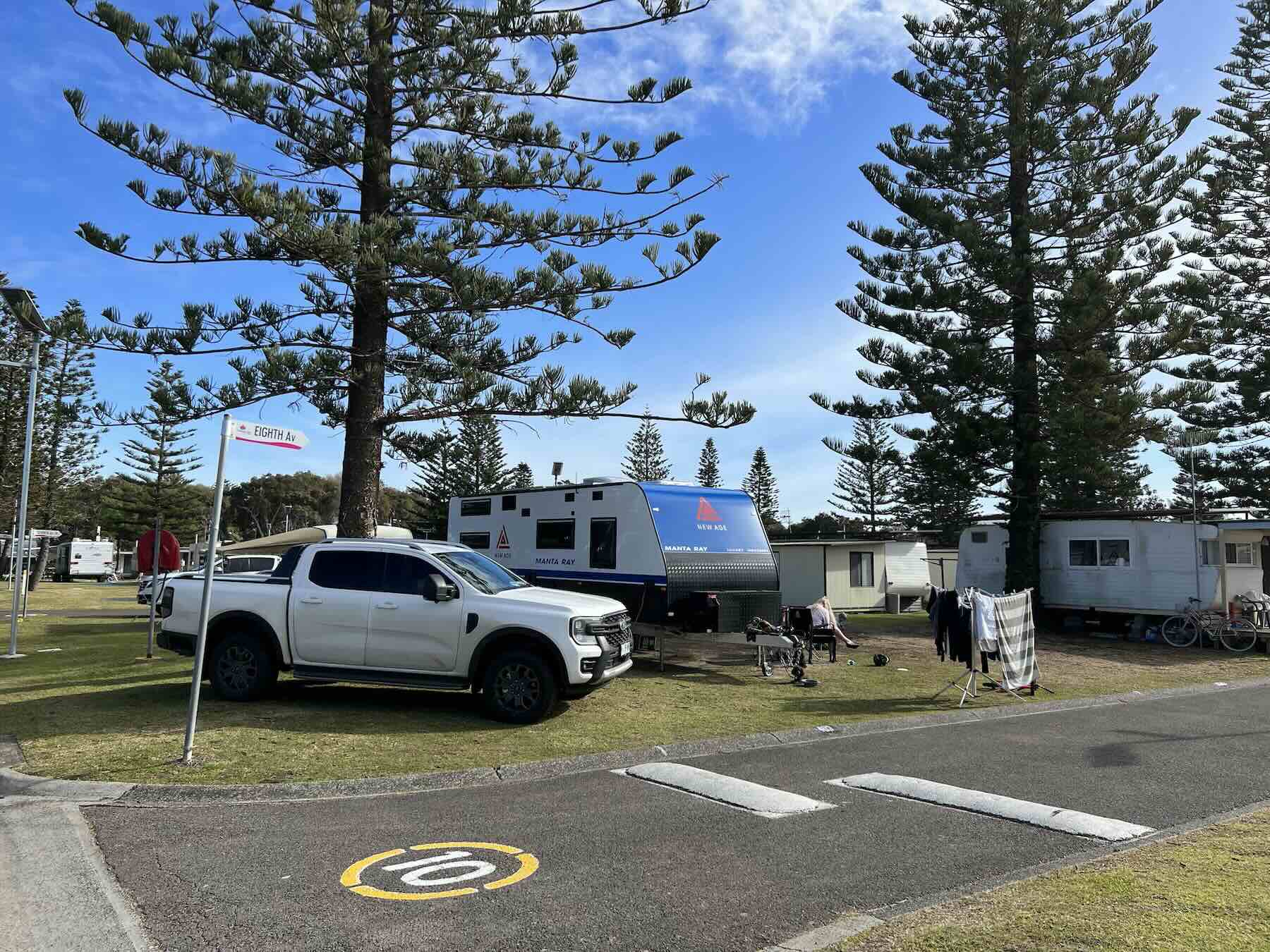
Congratulations, you've done it. After months of research, test-sits at caravan shows, and conversations with that mate who "knows everything about towing," you've bought your first caravan. It's sitting in the driveway, gleaming with promise. Now comes the part nobody really prepares you for: actually taking it somewhere.
If you're feeling a mix of excitement and genuine nervousness, you're in excellent company. Every grey nomad you see cruising confidently along the highway had a first trip too, complete with sweaty palms, forgotten essentials, and probably at least one "what have we done?" moment at a fuel station.
This guide is for the weeks between purchase and first departure. We'll cover what to check before you leave, how to pick a park that won't stress you out, common first-trip mistakes (so you can avoid them), and how Total Parks can help you find sites that actually fit your new rig.
The Reality of First-Trip Nerves
Let's address the elephant in the room: towing a caravan for the first time is intimidating. Your mirrors show a box the size of a small apartment following you everywhere. Every lane change feels consequential. Reversing into a site in front of experienced caravanners seems like a spectator sport you'd rather not headline.
Here's the good news: it gets easier remarkably quickly. Most new caravan owners report that by their second or third trip, the nerves have faded into comfortable routine. The key is setting yourself up for success on that first outing, and that starts before you even leave the driveway.
Before You Leave: The Pre-Trip Checklist
Coupling and Safety
Your caravan's connection to your tow vehicle is the most critical point of the entire setup. Before every trip, especially your first, check:
At the coupling:
- Coupling is fully engaged and locked (most have a visual indicator)
- Safety chains are crossed under the coupling and secured to your vehicle
- Breakaway cable is connected and has slack without dragging on the ground
- Jockey wheel is fully raised and secured
Tip: If you're unsure about any of this, most dealerships will happily run through the hitching process with you when you pick up your van. Some even offer a short towing lesson, absolutely worth asking about.
Electrical and Brakes
Your van needs to communicate with your vehicle. Before departure:
- Plug in the electrical connector and check all lights: indicators, brake lights, tail lights, and reverse lights
- Test the electric brakes by driving forward slowly and applying the brake controller
- Verify the brake controller is set appropriately for your van's weight (your dealer or manual will have recommendations)
For first-timers: Have someone stand behind the van while you operate the indicators and brakes. It only takes a minute and catches problems before they become roadside dramas.
Tyres and Wheels
Both your vehicle and caravan tyres need attention:
- Check pressures on all tyres (van and vehicle) when cold; your manual will specify the correct pressures for loaded towing
- Look for any obvious damage, cracks, or uneven wear
- Confirm wheel nuts are tight (many new vans require a re-torque after the first 100km)
Important: Caravan tyre pressures are often higher than you might expect. Don't guess: check the placard on your van or the manual.
Water, Gas, and Tanks
Depending on your van setup:
- Fill the fresh water tank if you need water at your destination
- Check gas bottles are secure and turned off for travel
- Empty grey water tank if needed (some parks don't appreciate arriving with full tanks)
- Close all taps and valves
Weight and Balance
This is where many first-timers come unstuck. Your caravan has weight limits, and exceeding them affects handling, braking, and safety.
Know your numbers:
- ATM (Aggregate Trailer Mass): The maximum your van can weigh fully loaded
- Tow Ball Weight: The downward force on your tow ball (typically 8-10% of loaded van weight)
- GVM (Gross Vehicle Mass): Your tow vehicle's maximum loaded weight
For your first trip, pack conservatively. You don't need everything, just the essentials. Heavy items should be low and centred, distributed evenly side-to-side, with more weight forward of the axle than behind.
First-trip rule: If you're not sure whether you need it, leave it at home. You can always bring more next time.
Final Walk-Around
Before departure, do a complete lap of the van:
- All hatches, windows, and doors closed and locked
- Awning secure
- Corner steadies fully raised
- External accessories (bike racks, spare wheels) secure
- Nothing hanging off or left on the roof
- Step retracted
Choosing Your First Park
Park selection matters more for your first trip than perhaps any other. The right park will ease your nerves; the wrong one will amplify them. Here's what to look for:
Easy Access
Your first park shouldn't require navigating narrow streets, tight corners, or challenging terrain. Look for:
- Wide, straight roads into the park - Avoid parks down winding coastal lanes or steep hills
- Generous internal roads - Room to manoeuvre without clipping corners
- No low-hanging branches - The sound of branches scraping your roof is not relaxing
- Clear entry points - Not tucked behind shopping centres with tight carparks
Pro tip: Google Maps satellite view is your friend. Before booking, zoom in and look at the park's layout. You can often spot potential trouble before you arrive.
Drive-Through Sites
For your first trip, a drive-through site is worth its weight in gold. Instead of reversing into position (with neighbours watching), you simply drive in one end and out the other.
Many parks offer drive-through sites specifically for larger rigs. When booking, specifically request a drive-through if available.
Site Size That Fits
Nothing adds stress like arriving to find your site is barely long enough for your van, let alone the tow vehicle.
This is where knowing your van's dimensions pays off. Most caravans are between 5.5 and 7.5 metres long (body length), but remember you need space for:
- Your tow vehicle (if staying connected)
- Room to open doors and access storage
- Your awning, if you're planning to set it up
On Total Parks, you can save your equipment dimensions to your profile. Once saved, you'll only see sites that actually fit your rig, no more guessing, no more arriving to tight squeezes.
Quieter Times
If possible, avoid booking your first trip during school holidays, long weekends, or peak summer. Quieter periods mean:
- Less pressure when setting up (fewer people watching)
- More helpful reception staff (not rushed off their feet)
- Better site selection (you're more likely to get that drive-through spot)
- A more relaxed park atmosphere overall
Best times for first-timers: Midweek outside school holidays is ideal. Shoulder season (March-May or September-November) offers pleasant weather and quieter parks.
Stay Close to Home
For your first outing, pick somewhere within 2-3 hours of home. This isn't about the destination, it's about the learning experience. If something goes wrong or you've forgotten something crucial, you're not far from backup.
You've got years ahead for long-haul adventures. Your first trip is about building confidence, not ticking off bucket-list destinations.
Using Total Parks to Find the Right Site
This is where Total Parks genuinely helps new caravan owners. The platform is designed to match your equipment to suitable parks, no guesswork required.
Saving Your Equipment
Head to the equipment section in your profile and add your caravan details:
- Equipment type - Caravan, motorhome, campervan, etc.
- Length - Total length including drawbar (from hitch to rear bumper)
- Width - Overall width
Once saved, these details carry across every search. Total Parks uses them to filter parks and show only sites that fit your specific rig.
Finding Beginner-Friendly Parks
When browsing the interactive map, look for parks that offer:
- Drive-through sites - Eliminate reversing stress
- Powered sites - Essential for most caravans
- Good facilities - Camp kitchens, modern amenities, and helpful reception
The search filters let you narrow down by location, facilities, and features, so you can find parks that match both your rig and your comfort level.
Reading Site Details
Good parks on Total Parks include:
- Site dimensions (so you know you'll fit)
- Site type (drive-through, back-in, grass, slab)
- Photos of actual sites
- Distance to facilities
This information takes the guesswork out of booking and helps avoid those "this isn't what I expected" moments.
Common First-Trip Mistakes (And How to Avoid Them)
Every new caravanner makes mistakes. Here are the most common ones, flagged so you can sidestep them.
Mistake 1: Overpacking
Your new van has so much storage it's tempting to fill every cupboard. Resist the urge.
Why it matters: Excess weight affects handling, braking, and fuel economy. An overloaded van is harder to control and puts strain on your vehicle.
The fix: Pack for your trip length, not for every contingency. You're going to a caravan park, not the wilderness, there are shops nearby.
Mistake 2: Not Practising Reversing
Reversing a caravan is a skill. It feels counterintuitive at first (the van goes the opposite way to your steering), and the only way to get comfortable is practice.
Why it matters: At some point, you will need to reverse. Even with a drive-through site, you might need to back out of a fuel station or adjust your position.
The fix: Before your first trip, spend an hour in an empty carpark practising. Use cones or markers and get a feel for how the van responds. It's time well invested.
Mistake 3: Arriving After Dark
Setting up camp in the dark, especially your first time, is stressful, disorienting, and no fun for anyone.
Why it matters: You can't see site boundaries, obstacles, or level ground. What should take ten minutes becomes a torch-lit ordeal.
The fix: Plan to arrive mid-afternoon. This gives you time to set up in daylight, explore the park, and settle in before dinner.
Mistake 4: Ignoring Weight Limits
Every van has weight limits, and they exist for good reason. Overloading affects tyre wear, suspension, braking distance, and insurance validity.
Why it matters: An overweight van handles poorly and is dangerous in emergency situations. It also wears out components faster.
The fix: Know your ATM and payload capacity. Weigh your van loaded (many public weighbridges charge only a few dollars) and stay within limits.
Mistake 5: Skipping the Level Check
A van that isn't reasonably level is uncomfortable to sleep in, affects fridge operation, and can strain the chassis.
Why it matters: Sleeping at an angle is miserable. Gas absorption fridges don't work properly when tilted.
The fix: Bring levelling blocks (or buy them at the park) and take a few minutes to get reasonably level. It doesn't need to be perfect, but it shouldn't feel like you're sleeping on a hill.
Mistake 6: Forgetting to Retract Everything
Jockey wheels, corner steadies, steps, awnings: if it extends, it needs to retract before you move.
Why it matters: Driving with the jockey wheel down will destroy it in seconds. Leaving the steps out can damage them and your van.
The fix: Develop a departure checklist. Walk around the van before hitching up and visually confirm everything is retracted and secured.
Parks That Welcome New Caravanners
Some parks are particularly well-suited to first-timers: friendly staff, easy layouts, and excellent facilities that make the experience enjoyable rather than stressful.
BIG4 Launceston Holiday Park, Tasmania
BIG4 Launceston Holiday Park is an excellent choice for your first van trip in Tasmania. The park offers:
- Easy access and layout - Wide roads and well-spaced sites
- Excellent facilities - Modern amenities, camp kitchen, and helpful reception staff
- Central location - Explore northern Tasmania without long daily drives
- LexFun next door - Tasmania's largest indoor entertainment centre means rainy days aren't wasted
The Tasmanian approach to caravan parks is generally more relaxed than busy mainland holiday spots, making it ideal for building confidence.
BIG4 Aireys Inlet Holiday Park, Victoria
For those on the mainland, BIG4 Aireys Inlet Holiday Park on the Great Ocean Road offers a welcoming first-trip experience:
- Relaxed atmosphere - Quieter than nearby Lorne, with less peak-season pressure
- Range of sites - Options to suit different rig sizes
- Beautiful location - Walking distance to beaches and the iconic Split Point Lighthouse
- Quality facilities - Well-maintained amenities and helpful staff
The Surf Coast region is a manageable first destination from Melbourne, close enough for a confidence-building short trip, beautiful enough to make it memorable.
Building Confidence: What to Expect
Your first trip won't be perfect, and that's completely fine. Expect:
- Setup to take longer than it "should" - You're learning. It will speed up.
- At least one moment of uncertainty - That's normal. Ask for help if needed, caravan parks are friendly places.
- To forget something - Everyone does. Parks have kiosks, and there are always shops nearby.
- Things to be different from expectations - That's part of the adventure.
Also expect:
- A genuine sense of accomplishment - You did it!
- To sleep surprisingly well - Fresh air and new surroundings work wonders
- To start planning your next trip - The caravan bug is real
Your First Trip Checklist
Before departure:
- Coupling locked and safety chains connected
- Breakaway cable attached
- All lights working (indicators, brakes, tail lights)
- Brake controller tested and adjusted
- Tyres checked and inflated correctly (van and vehicle)
- Wheel nuts torqued
- Gas off and secure
- Fresh water filled (if needed)
- Grey water empty
- All hatches, windows, doors closed
- Awning secure, step retracted
- Corner steadies and jockey wheel raised
- Mirrors adjusted
- Weight distributed correctly
Pack:
- Levelling blocks
- Wheel chocks
- Power lead and adaptor
- Fresh water hose
- Basic tools (screwdriver, pliers, tyre gauge)
- Torch or headlamp
- First aid kit
- Your van's manual
You've Got This
Every experienced caravanner started exactly where you are now, nervous, excited, and wondering if they'll ever feel comfortable towing this thing. They all figured it out, and so will you.
Your first trip is the hardest. The second is easier. By the third, you'll wonder what you were worried about.
Pick a nearby park with drive-through sites. Give yourself plenty of time. Pack light. And enjoy the feeling of pulling into your first campsite with your very own van behind you.
The freedom that comes with caravan travel is genuinely special. You've already made the biggest decision: buying the van. Now all that's left is to use it.
See you on the road.
Find beginner-friendly parks with the right site sizes for your new rig.
Browse All ParksEnjoyed this article? Follow @totalparks for weekly camping tips and park spotlights.