
Best Big Rig Caravan Parks on the East Coast
Travelling with a large caravan or motorhome? Here's how to find parks with drive-through sites, long slabs, and easy access along the East Coast.
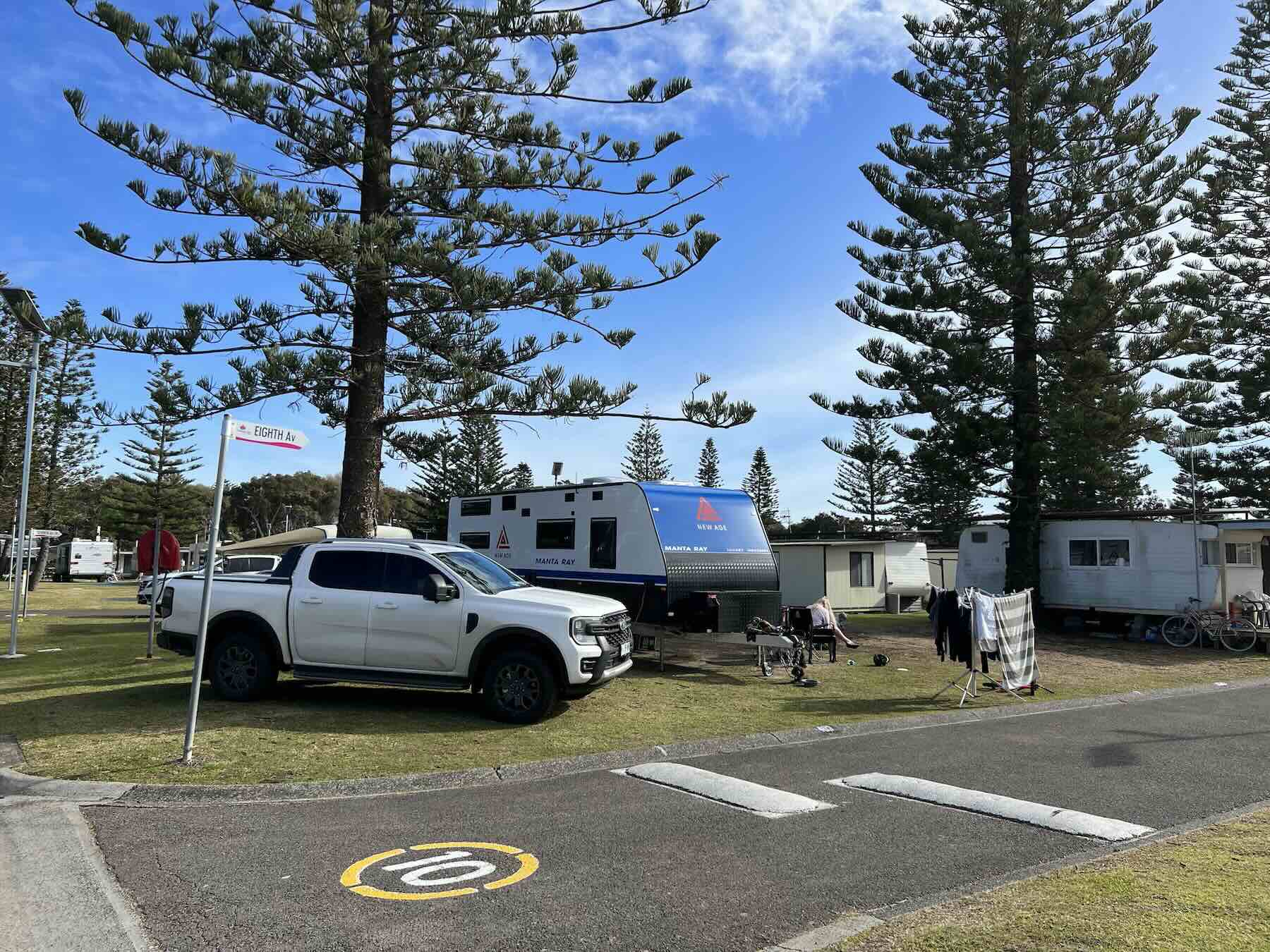
If you've invested in a proper touring rig, whether that's a 24-foot caravan, a fifth-wheeler, or a big motorhome, you'll know the frustration of rocking up to a park only to find the sites are too tight, the access roads are lined with low branches, and the bloke in reception looks nervous the moment you pull in.
Finding parks that genuinely cater to larger rigs takes a bit of homework. But once you know what to look for, you'll spend less time stressing about whether you'll fit and more time enjoying the trip.
This guide covers everything you need to know about finding big rig friendly parks along Australia's East Coast: from terminology to regional tips to making sure you book the right site first time.
What Makes a Park "Big Rig Friendly"?
Not every park that accepts caravans is set up for big rigs. Here's what separates genuinely big rig friendly parks from the rest. If you want the term itself pulled apart, including why a park-level label tells you less than the length of the bay you book, start with what "big-rig friendly" actually means.
Drive-Through Sites
The gold standard for big rigs. Drive-through sites let you pull in one end and drive out the other – no reversing required. This is a game-changer when you're towing a long van or driving a motorhome with limited rear visibility.
Why it matters: Backing a 20-foot-plus caravan into a tight spot while neighbours watch is nobody's idea of fun. Drive-through sites eliminate that stress entirely.
Site Length
Site length is measured in metres, and parks typically categorise their sites as:
| Site Length | Suitable For |
|---|---|
| Under 8m | Camper trailers, pop-tops, small caravans |
| 8–10m | Standard caravans (17–21 feet) |
| 10–12m | Larger caravans, some motorhomes |
| 12m+ | Big rigs, fifth-wheelers, large motorhomes |
Important: Site length usually refers to the total space available, including your tow vehicle if you're staying connected. Always confirm whether the listed length is for the van only or the full rig.
Slab vs Grass Sites
A concrete or bitumen slab makes levelling your van much easier: no soft ground to sink into, no mud after rain, and a solid surface for your jacks and stabiliser legs.
Grass sites can work fine in dry weather, but after a few days of rain, you might find yourself digging out wheel chocks or watching your awning fill with water because the ground isn't quite level.
Access Considerations
It's not just about the site itself. The best big rig parks also think about:
- Wide internal roads – Room to manoeuvre without clipping corners
- No low-hanging branches – Nothing worse than hearing a branch scrape your roof
- Easy entry/exit from the main road – Avoiding tight turns off busy highways
- Sensible speed humps – If they exist, they should be driveable with a long wheelbase
Key Features to Look For
When researching parks, here's what to check:
Site Dimensions and Photos
Good parks publish site dimensions clearly. Even better parks include photos of individual sites, so you can see exactly what you're booking.
If a park doesn't list site lengths, that's often a sign their sites are on the smaller side, or they haven't thought about the needs of larger rigs.
Dump Points and Fresh Water
Big rigs with ensuite bathrooms need access to dump points (for grey and black water) and fresh water fill stations. Check that these are:
- Easy to access without having to unhitch
- Available without long queues during checkout time
- Positioned sensibly (not at the end of a narrow dead-end road)
Level Sites
Nothing ruins a good night's sleep like lying at an angle. Look for parks that specifically mention level sites or concrete slabs designed for larger vans.
Easy Ingress and Egress
The best parks are set up so you can arrive and leave without performing a 15-point turn. Google Maps satellite view is your friend here – you can often spot tight corners or awkward layouts before you book.
Regional Tips for the East Coast
The East Coast is grey nomad territory, and plenty of parks cater to big rigs. Here's a general lay of the land:
NSW North Coast
NSW directory: browse our curated big-rig-friendly NSW holiday parks collection — the live list of NSW parks set up for fifth-wheelers, motorhomes, and 20-foot-plus caravans. Drive-through sites, long slabs, wide internal roads. Confirm specific site lengths with the park before you book.
The stretch from Newcastle to the Queensland border is one of the most popular touring routes in Australia. Key areas include:
- Port Macquarie – Good selection of parks with larger sites
- Coffs Harbour – Mix of beach parks and inland options
- Byron Bay area – Can be tight in peak season; book well ahead
- Yamba and Iluka – Quieter alternatives with more space
Tip: The Pacific Highway upgrades have made access much easier for big rigs, but some of the smaller coastal towns still have narrow approach roads. Check Google Maps before committing.
NSW South Coast
From Sydney down to the Victorian border, you'll find:
- Shoalhaven area – Nowra, Huskisson, and surrounds have good options
- Batemans Bay – Popular stopover with several big rig friendly parks
- Narooma and Bermagui – Quieter, with parks that cater to longer stays
- Eden and Merimbula – Southern gems with good facilities
Tip: The Princes Highway is mostly fine for big rigs, but watch for the occasional winding section. The newer bypasses are a treat.
Queensland Coastal Route
Heading north into Queensland, you'll find purpose-built parks all the way to Cairns:
- Gold Coast hinterland – Good staging points before or after crossing the border
- Sunshine Coast – Mix of tourist parks and quieter options inland
- Fraser Coast – Hervey Bay is a grey nomad favourite with excellent parks
- Mackay and Airlie Beach – Gateway to the Whitsundays with big rig options
- Townsville and beyond – Parks generally well set up for touring rigs
Tip: Queensland parks often have slightly larger sites than their southern counterparts – the land is cheaper and the parks tend to be newer.
The Sydney-Brisbane Corridor
If you're transiting between Australia's two biggest cities, consider:
- Breaking the trip – It's a long haul in one go. Parks around Port Macquarie, Coffs Harbour, or the Gold Coast hinterland make good stopovers
- Avoiding peak times – School holidays and long weekends see heavy traffic and fully booked parks
- Inland alternatives – The New England Highway via Tamworth and Armidale offers a less crowded route with good parks
Booking Tips for Big Rigs
Save Your Equipment Details
On Total Parks, you can save your rig details (caravan length, motorhome type, tow vehicle setup) to your profile. Once saved, every search automatically filters for sites that fit your equipment. No more guessing, no more arriving to find the site is too short.
Use the Equipment Filters
When browsing parks, filter by:
- Site length – Only see sites that fit your rig
- Drive-through access – Skip the reversing stress
- Slab sites – Find level concrete pads
- Pet-friendly – If you're travelling with a dog
These filters do the homework for you, showing only parks and sites that match your setup.
Peak Season Planning
During school holidays, Easter, and summer, the best big rig sites go fast. If you're travelling during these periods:
- Book weeks or months ahead for popular parks
- Have backup options in case your first choice is full
- Consider shoulder seasons when parks are quieter and sites more available
Check Site Photos and Details
Good parks on Total Parks include photos of individual sites, site dimensions, and facility locations. Before you book, check:
- Site length (including space for your tow vehicle)
- Whether it's drive-through or back-in
- Surface type (concrete slab, gravel, or grass)
- Proximity to dump points and amenities
You've Got the Rig – Now Use It
The whole point of having a big rig is the freedom to travel in comfort. With the right filters and your equipment saved, you can book with confidence, knowing the site will fit your rig before you arrive.
The East Coast is full of brilliant parks catering to grey nomads and touring caravanners. Save your rig details, browse the options, and enjoy the journey.
See you on the road.
Curated NSW directory of caravan parks set up for fifth-wheelers, motorhomes, and 20-foot-plus caravans.
Browse Big-Rig-Friendly NSW ParksEnjoyed this article? Follow @totalparks for weekly camping tips and park spotlights.