
Best Stargazing Parks in Australia
Australia has some of the darkest skies on Earth. Here's where to park up, switch off, and look up – from officially accredited dark sky parks to remote outback stops where the stars do all the talking.
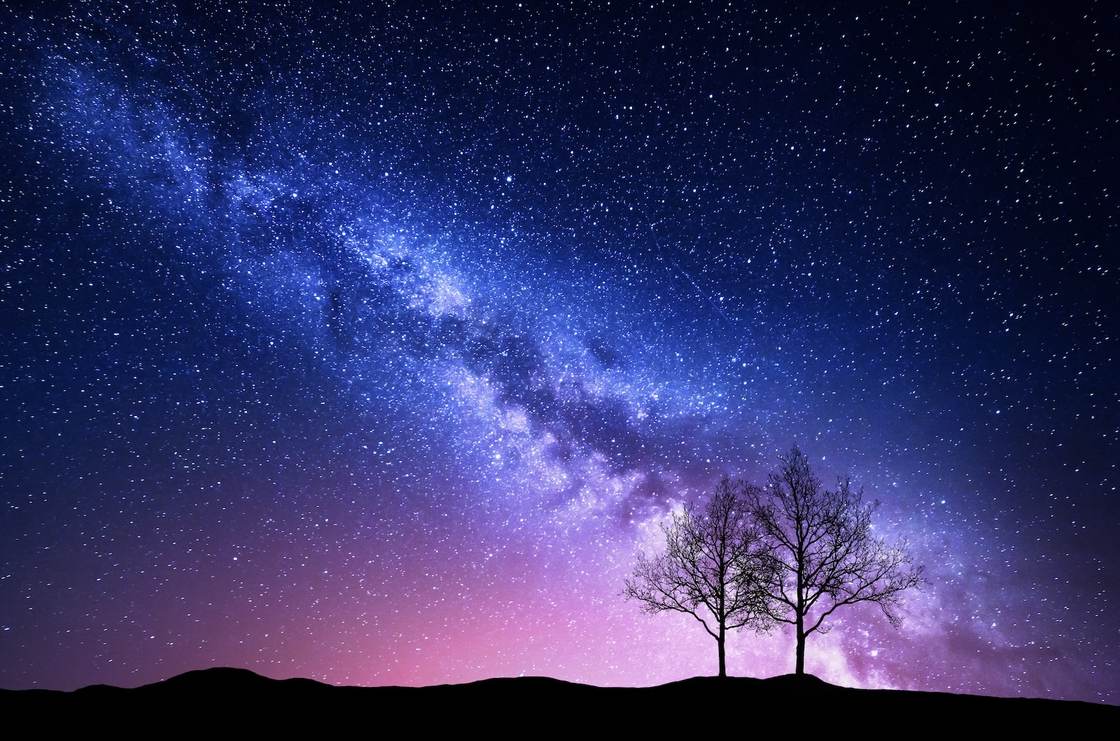
If you have never stood in the Australian outback at night and looked up, you are missing one of the most spectacular free shows on the planet. Away from the city glow, the Milky Way is not some faint smudge – it is a thick band of light stretching horizon to horizon, packed with detail you can actually see with your eyes. Satellite trails, shooting stars, the hazy glow of the Magellanic Clouds. It is genuinely arresting the first time you see it properly.
Australia's combination of low population density, dry air, and southern hemisphere positioning makes it one of the best places in the world for stargazing. And the good news for caravan and camping travellers? The best night skies tend to be in exactly the kinds of places you are already heading – remote parks, outback stops, and country towns where the nearest traffic light is a hundred kilometres away.
What Makes a Great Stargazing Spot
Not all dark skies are equal. A few things separate a decent night sky from a jaw-dropping one:
Distance from cities is the obvious factor. Light pollution from urban areas can wash out the sky for 100km or more. The further you get from major population centres, the better. Australia has an advantage here – most of the continent has virtually zero artificial light.
Altitude helps. Higher elevations mean less atmosphere between you and the stars, which reduces distortion. Places like the Warrumbungle Ranges or the Flinders Ranges benefit from this.
Humidity and cloud cover matter more than people realise. Dry inland air produces sharper, more transparent skies. Coastal humidity can create a haze that dulls the view, even when the sky looks clear. Central Australia and the outback are ideal because the air is bone dry.
Local lighting is the one you can control. Even a single bright campsite light or an unshielded toilet block can wreck your night vision for 20 minutes. The best stargazing parks understand this and keep lighting minimal.
Australia's Officially Dark Skies
Australia now has several locations formally recognised by DarkSky International (formerly the International Dark-Sky Association). These are not just accidentally dark – they have actively worked to protect their night skies through lighting regulations and community commitment.
Warrumbungle National Park, NSW
Australia's first accredited Dark Sky Park and the first in the southern hemisphere, designated in 2016 with Gold Tier status. That puts it alongside heavy hitters like Death Valley in the US and Galloway Forest Park in Scotland.
The park surrounds Siding Spring Observatory, Australia's premier optical and infrared astronomical observatory with over 20 research telescopes. There is a reason the country's most important observatory was built here – the combination of altitude, dry air, and distance from cities makes the Warrumbungle region one of the best observing sites in the world.
The nearby town of Coonabarabran has lighting regulations specifically designed to protect the observatory's dark skies. Even the local streetlights are carefully shielded to prevent upward light spill.
What to do: The National Park runs guided "Explore the Dark Sky" tours year-round at the Warrumbungle Visitor Centre. You will look through 8-inch dobsonian telescopes and binoculars with ranger guides who know their stuff. Adult tickets are $30, family rate $100. During the day, hike the park's volcanic formations – the Breadknife and Grand High Tops walks are excellent.
Siding Spring Observatory is open for daytime visits (including tours of the Anglo-Australian Telescope), though it does not open at night for public viewing. Worth a visit regardless – the Explorer Observatory on site has a gallery and viewing dome.
Where to stay: John Oxley Caravan Park is right in Coonabarabran, just 25km from the national park. Powered sites, cabins, and a good base for exploring the region. The town itself is quiet at night, which is exactly what you want.
River Murray International Dark Sky Reserve, SA
Australia's only International Dark Sky Reserve, accredited in 2019, and one of only about two dozen worldwide. The reserve spans over 3,200 square kilometres of the Murraylands region, roughly 90 minutes northeast of Adelaide.
This is not a single viewing spot – it is an entire region committed to dark sky preservation. Sky quality measurements regularly exceed 21.9 on the Bortle scale, which is about as dark as it gets anywhere on Earth.
What to do: The reserve has multiple viewing locations along the Murray River, from structured campgrounds to clifftop lookouts. Swan Reach Conservation Park forms the core zone and is the prime stargazing location. Walker Flat has clifftop lookouts, and the Big Bend cliffs near Nildottie offer dramatic views both day and night.
The reserve is close enough to Adelaide for a weekend trip, which makes it the most accessible world-class dark sky site in Australia.
Where to stay: Swan Reach Caravan Park puts you right inside the dark sky reserve, on the banks of the Murray. It is a small, quiet park – perfect for stargazing. If you want a bigger park with more facilities, BIG4 Blanchetown Riverside Holiday Park is also within the reserve boundary and has powered sites, cabins, and a pool.
Winton, QLD
In March 2026, Winton became Queensland's first International Dark Sky Community and only the second in Australia. The outback town, 1,350km from Brisbane, spent nearly three years working toward certification, retrofitting streetlights with warm-coloured bulbs and implementing strict outdoor lighting policies.
The certification builds on the Jump-Up Dark Sky Sanctuary, just 25km away, which has been recognised since 2019. Together they form the beginnings of what locals are calling a "dark sky highway" through outback Queensland.
What to do: Winton is already worth a visit for the Australian Age of Dinosaurs museum and the Waltzing Matilda Centre. Now you can add world-class stargazing to the itinerary. The combination of outback remoteness and deliberate light reduction makes the skies here exceptional.
Where to stay: Matilda Country Tourist Park is a solid base right in Winton. Powered sites, budget cabins, and friendly management who understand the outback traveller. After a day with the dinosaur fossils, you will step outside and the sky does the rest.
The Red Centre: Where the Milky Way Lives
If you want the most dramatic night skies in Australia, head for central Australia. The combination of desert-dry air, zero light pollution, high altitude, and cloudless winter skies produces some of the best stargazing conditions on the planet. This is not an exaggeration.
Uluru-Kata Tjuta
Watching the stars appear over Uluru as the rock fades from red to black is an experience that sticks with you. The night sky here is extraordinary, and several tour operators run stargazing experiences within Uluru-Kata Tjuta National Park.
Uluru Astro Tours is the only operator licensed to run stargazing tours inside the national park at night. Tours include laser-guided constellation talks, telescope viewing, and a professional photograph taken under the stars. They run 2.5 to 3 hours and depart about an hour after sunset. Adult tickets from around $109.
For families, Outback Sky Journeys runs a shorter Family Astro Tour (about an hour, departing at sunset, $68 adults, kids free) which is more manageable with younger ones.
Where to stay: Ayers Rock Camping Resort at Yulara is the obvious base. It is the only camping option near Uluru, with powered and unpowered sites. Book well ahead during the dry season.
Gemtree, NT
About 150km northeast of Alice Springs along the Plenty Highway, Gemtree Outback Wilderness Retreat sits at 650 metres elevation in the middle of genuine outback. The nearest town of any size is Alice Springs, and the nearest significant light source is even further.
This is a place where the camp oven dinner is served under the stars because there is nowhere else to eat it. Gemtree does not market itself specifically as a stargazing destination, but the location delivers some of the darkest skies you will find at a park with actual facilities. Powered and unpowered sites, cabins, a pool, and fossicking tours for zircons and garnets during the day.
Alice Springs
Alice Springs is small enough (population around 25,000) that the outskirts already have decent dark skies, and the surrounding desert is exceptional. The town is also home to the Earth Sanctuary, which has been running astronomy tours for over 25 years.
Their standard Astro Tour (1.5 hours, from $25) includes telescope viewing and laser-guided constellation talks, with Aboriginal creation stories woven through the science. The premium Sunset 2 Sunrise experience is an overnight camping affair – 15 hours of astronomy, meals, and sleeping under the stars. It is not cheap, but it is genuinely unique.
Where to stay: Alice Springs Tourist Park or Discovery Parks – Alice Springs both offer full facilities and are well set up for caravans and motorhomes.
The Flinders Ranges: Southern Dark Skies
The Flinders Ranges in South Australia offer a compelling combination: dramatic landscapes, dark skies, and accessibility from Adelaide (about 4-5 hours drive).
Wilpena Pound
The natural amphitheatre of Wilpena Pound is spectacular by day and the skies above it are equally impressive at night. The Flinders Ranges are far enough from Adelaide and the Spencer Gulf towns that light pollution is minimal.
Wilpena Pound Resort has camping sites and accommodation right at the entrance to the pound. Fall asleep looking at stars through canvas – there are worse ways to spend a night.
Further south in the ranges, Rawnsley Park Station offers powered sites and eco-villas with views of Wilpena Pound. The property runs its own activities and the isolation means excellent night skies.
Far West NSW: Outback Skies on a Budget
Broken Hill
Broken Hill sits in the far west of NSW, closer to Adelaide than Sydney, in a landscape of red earth and mulga scrub. The town has a population of about 17,000 and the nearest city of any size is over 500km away. Light pollution is essentially nonexistent once you step outside the town limits.
The Living Desert reserve, a short drive north of town, has a sculpture park on top of a hill that doubles as a superb stargazing viewpoint. During the day, wander the line of sandstone sculptures; at night, the 360-degree horizon delivers stars right down to the ground.
Where to stay: Broken Hill Tourist Park is well set up for touring caravans and has powered sites, cabins, and clean amenities. The town itself is worth a couple of nights for the art galleries, the Palace Hotel (famous from the film Priscilla), and the Royal Flying Doctor Service base.
Outback Queensland
Beyond Winton, outback Queensland is packed with small towns and caravan parks where the night sky is simply a given. The further west you go, the darker it gets.
Longreach
Longreach (population around 3,000) is dark enough that locals barely think about the stars – they are always there. The town is a natural stop on the outback circuit, home to the Stockman's Hall of Fame and the Qantas Founders Museum. Spend your days learning about outback history and your evenings under a sky that makes city dwellers weep.
Where to stay: Longreach Tourist Park has powered sites, cabins, and a camp kitchen. Good facilities for a longer stay while you explore the region.
When to Go: Timing Your Stargazing Trip
Moon Phase
This is the single biggest factor most people overlook. A full moon washes out all but the brightest stars and completely obscures the Milky Way. Plan your trip around the new moon (when the moon is absent from the night sky) for the best results. The week either side of new moon is also good – you want the moon either below the horizon during your viewing time, or only showing as a thin crescent.
Moon phase calendars are free and easy to find online. Check before you book.
Season
Winter (May-August) is generally best for stargazing across most of Australia. The air is drier, the nights are longer, and the galactic centre of the Milky Way is high overhead. The downside: it gets cold, especially in the outback. Nights in central Australia can drop below zero.
Autumn (March-May) and Spring (September-November) are excellent compromises, with good sky conditions and less extreme temperatures.
Summer (December-February) has the shortest nights and can bring humidity and thunderstorms, especially in the tropics. The Milky Way is also lower in the sky. That said, summer in southern Australia can still deliver good stargazing on clear nights.
Best Viewing Time
The sky gets properly dark about 90 minutes after sunset. Give your eyes at least 20 minutes to adapt to the dark – that means no phone screens, no torches, no bright lights. Use a red-light torch if you need to see where you are walking.
The best viewing is typically between 10pm and 2am, when the sky is fully dark and before any pre-dawn glow appears.
Gear and Tips
What to Bring
- A reclining camp chair or a swag – you will be looking up for extended periods, and craning your neck gets old fast. A chair that leans back or simply lying on a blanket is far more comfortable
- Binoculars – even a basic pair of 7x50 or 10x50 binoculars will reveal detail in the Milky Way, star clusters, and nebulae that are invisible to the naked eye. You do not need a telescope to have an incredible experience
- Warm layers – nights in dark sky areas tend to be cold, especially in winter. Thermals, a decent jacket, beanie, and gloves. You will be stationary, so you cool down fast
- A red-light torch – white light destroys your night vision for 20 minutes. A red filter preserves it. Most headlamps have a red mode, or tape red cellophane over a standard torch
- A phone app – Stellarium (free) is excellent for identifying what you are looking at. Point your phone at the sky and it overlays constellation lines, planet names, and satellite tracks. Sky Tonight and Night Sky are also solid options. Set your phone to maximum screen dimming and use night mode
What Not to Bring
- Bright lanterns – they wreck the view for everyone. If you are at a park, keep site lighting off or minimal
- Unrealistic expectations – the night sky is spectacular to the naked eye, but it does not look like long-exposure astrophotography. The Milky Way appears as a glowing band, not a vivid river of colour. It is still remarkable
Photographing the Night Sky
Modern smartphones can actually take decent astrophotography in night mode. For better results:
- Use a tripod or prop your phone against something stable
- Set a timer to avoid shake when pressing the shutter
- If your phone has a night or astrophotography mode, use it – these modes take long exposures that gather more light
- Point toward the Milky Way (roughly south-southwest in the evening during winter)
- Foreground interest makes a photo – include a tree, your van, or the horizon rather than just empty sky
What You Will See
The southern hemisphere sky has some genuine showstoppers that northern hemisphere observers never get to see:
- The Milky Way galactic centre – the densest, brightest part of our galaxy passes directly overhead in winter. It is visibly brighter and more detailed than the northern view
- The Magellanic Clouds – two satellite galaxies visible as fuzzy patches in the southern sky. They look like detached pieces of the Milky Way
- The Southern Cross (Crux) – Australia's most famous constellation, on the flag for good reason. Use it to find south
- Alpha Centauri – the closest star system to Earth at 4.37 light years, visible as a bright star near the Southern Cross
- The Emu in the Sky – an Aboriginal constellation formed by the dark patches in the Milky Way. Once you see it, you cannot unsee it
- Satellites and the ISS – on any clear night you will spot satellites crossing the sky. The International Space Station is the brightest and fastest, visible to the naked eye on many passes. Stellarium will tell you when
Planning Your Dark Sky Trip
The beauty of stargazing from a holiday park is that it costs nothing extra. You are already there, the sky is already there, and you just need to step outside after dinner and look up.
If you are specifically planning around dark skies, here is a rough priority list:
| Destination | State | Darkness Level | Accessibility | Best Season |
|---|---|---|---|---|
| River Murray Reserve | SA | Officially accredited reserve | 90 min from Adelaide | Year-round |
| Warrumbungle / Coonabarabran | NSW | Dark Sky Park (Gold Tier) | 5 hours from Sydney | Year-round |
| Winton | QLD | Dark Sky Community | 15 hours from Brisbane | Apr–Oct |
| Uluru | NT | Exceptional | Fly or drive | May–Sep |
| Flinders Ranges | SA | Excellent | 4–5 hours from Adelaide | Year-round |
| Broken Hill | NSW | Excellent | 12 hours from Sydney | Year-round |
| Gemtree | NT | Exceptional | 2.5 hours from Alice Springs | May–Sep |
| Longreach | QLD | Excellent | 14 hours from Brisbane | Apr–Oct |
For the officially accredited sites (River Murray, Warrumbungle, Winton), you are guaranteed the local community has invested in protecting the night sky. For the rest, the sheer remoteness does the job.
Use Total Parks to browse parks in these regions and filter by the features that matter to you.
One Last Thing
You do not need to travel to any of these specific places to see great stars. Any park more than a couple of hours from a major city, on a clear moonless night, will deliver a sky that city residents can barely imagine. Some of the best stargazing sessions happen by accident – you pull into a park you booked for convenience, step out after dinner, and the sky simply stops you in your tracks.
That is the real joy of touring Australia. The stars come free with every night.
Use Total Parks to find remote parks with dark skies across Australia.
Find a Dark Sky ParkEnjoyed this article? Follow @totalparks for weekly camping tips and park spotlights.